PyPI livev1.1.1Python 3.11+

Largestack AI

The production stack for agents, RAG, guardrails, and observability. Largestack AI is a Python 3.11+ open-source framework for building typed agents, tool workflows, RAG assistants, guardrails, observability, and production-style AI workflow evaluation.

Typed agentsRAG workflowsGuardrails + observability
terminal · quickstart
# Install Largestack
$ pip install largestack
$ largestack --help
$ python -c "import largestack; print(largestack.__version__)"

# Scaffold and validate
$ largestack init support-agent
$ cd support-agent
$ largestack doctor
 agents · tools · RAG · guardrails available
 traces, checks and deployment files ready
Governed agents Plan · act · verify
Trace every run Logs · metrics · cost
PyPI package pip install largestack
Agent runtimeTool callingWorkflow engineRAG + memoryGuardrailsObservabilityCLI / SDKDocker / Helm
Developer resources

Install, inspect, read, and evaluate Largestack.

Start from PyPI, review the public repository, open the framework documents, or contact RivaiLabs to scope a controlled AI workflow POC.

Documentation

Open the documentation behind the framework.

These links open the full Largestack documentation for install, quickstart, architecture, RAG, orchestration, security, observability and deployment.

Runtime flow

How Largestack executes a real AI request.

Every run follows the same controlled path: input, planning, orchestration, agent/tool/RAG execution, guardrails, response, traces and deployable runtime.

Runtime workflow One clean path from request to deployable AI runtime.
01InputApp / API / CLI
02PlanTyped planner
03OrchestrateRoutes + state
04ExecuteAgents + tools + RAG + memory
05GuardPolicy checks
06RespondGrounded answer
07TraceLogs + metrics
08DeployRuntime package
Largestack keeps the plan, execution, guardrail decisions, response, traces and deployment surface connected in one governed run. Install and run
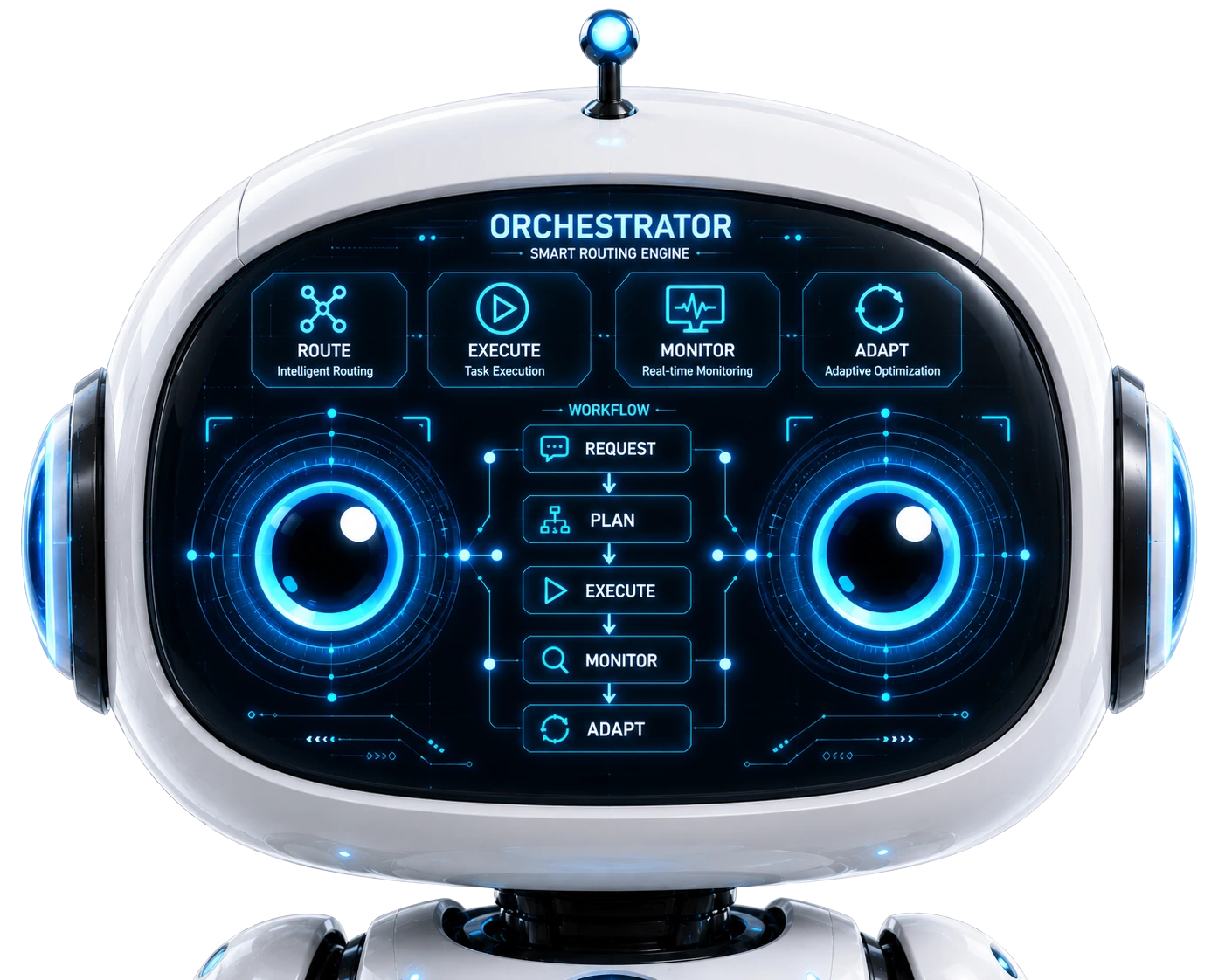
Largestack orchestrator routing request, execution, monitoring and adaptation
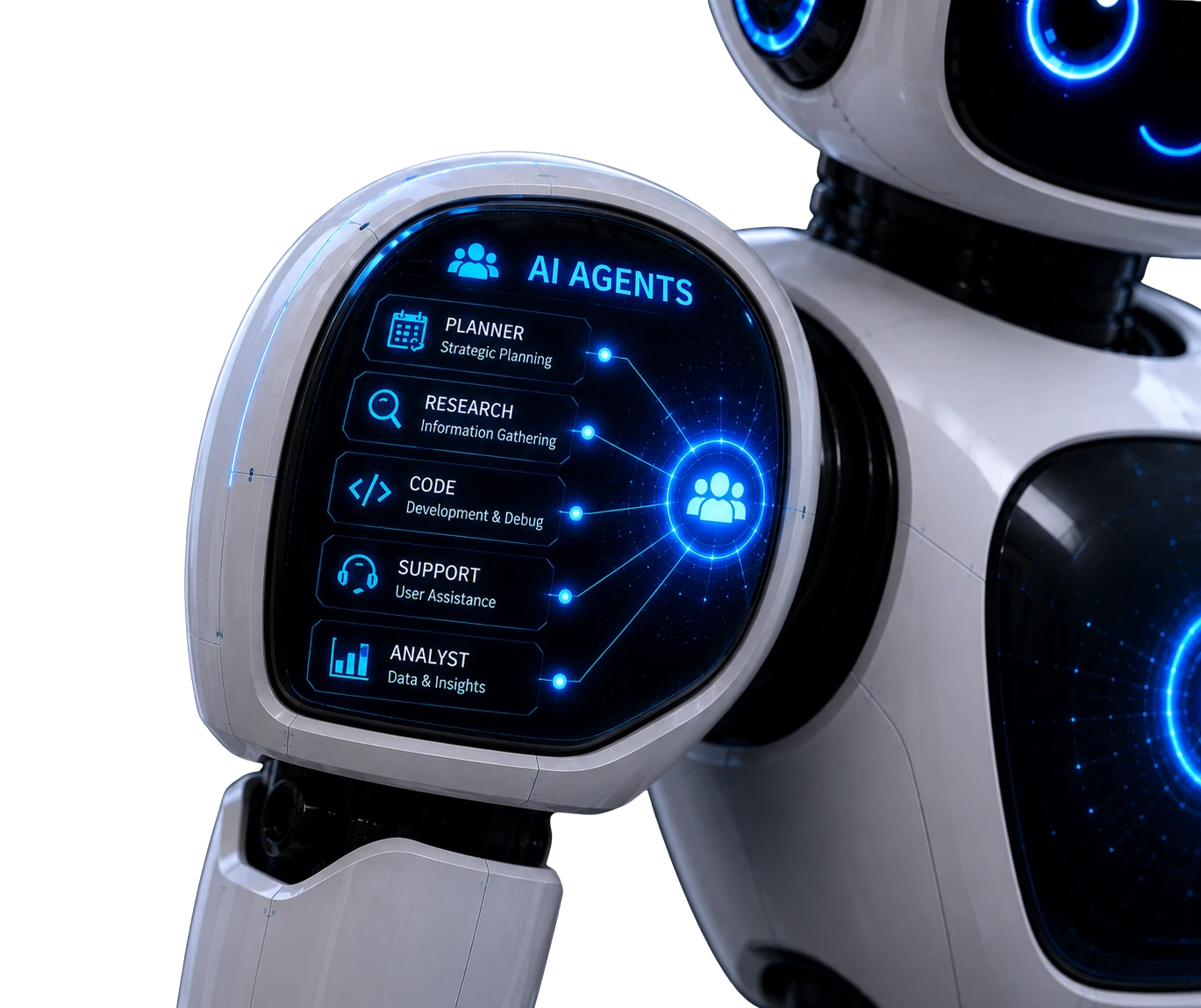
Largestack AI agents for planner, research, code, support and analyst roles
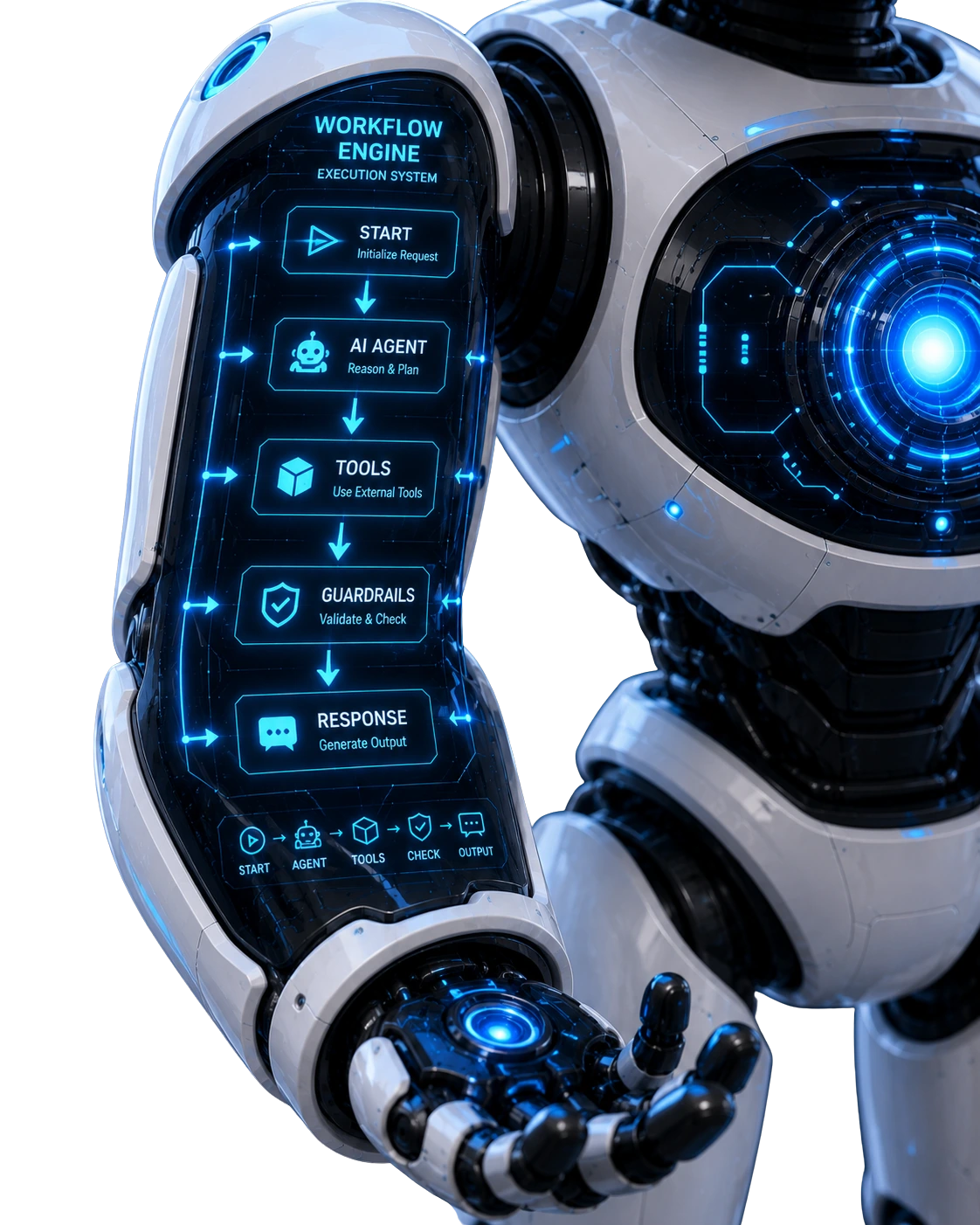
Largestack workflow engine moving through start, agent, tools, guardrails and response
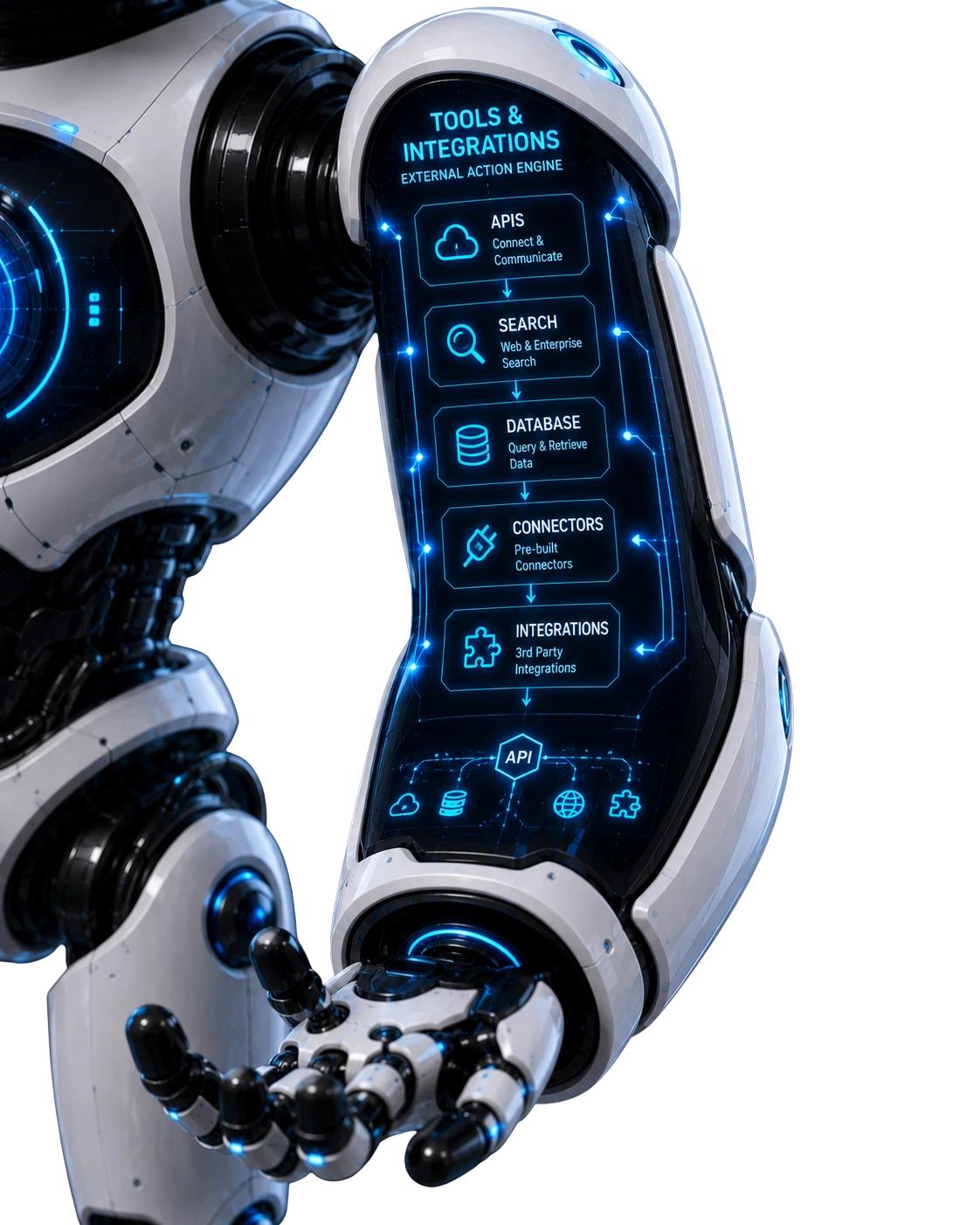
Largestack tools and integrations for APIs, search, databases and connectors
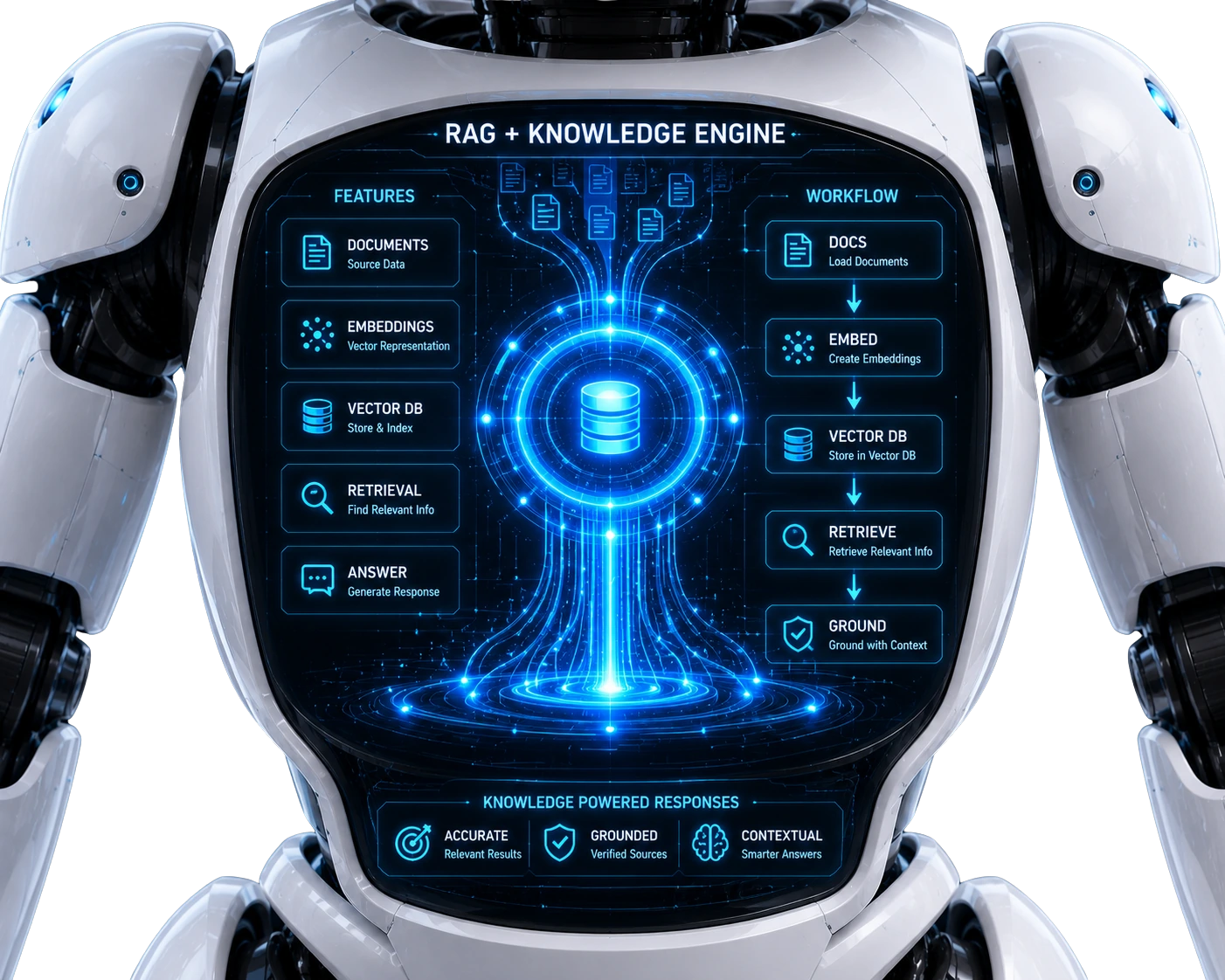
Largestack RAG and knowledge engine with documents, embeddings, vector DB, retrieval and grounded answer
Largestack memory system with short term, long term, recall and store
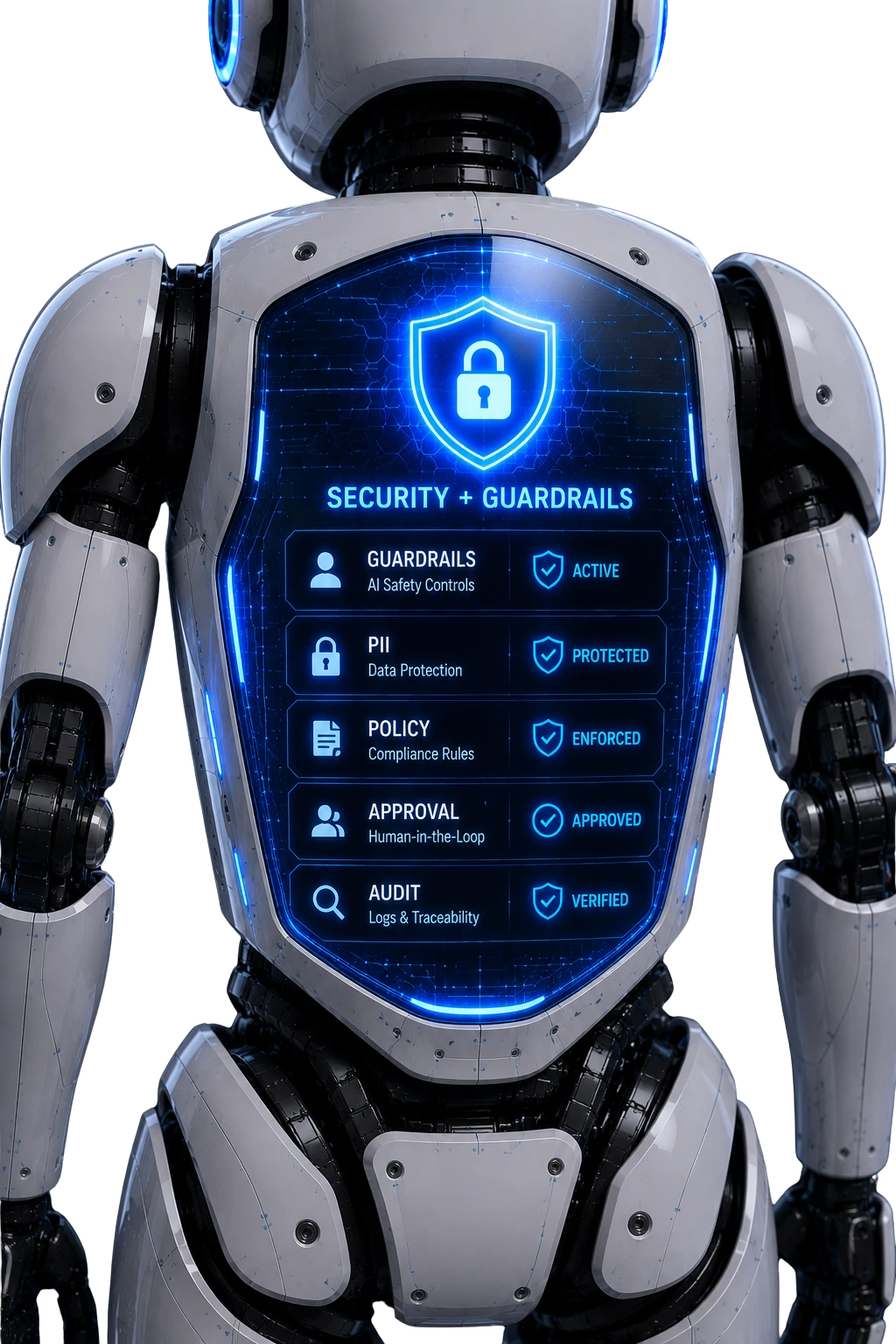
Largestack security and guardrails for PII, policy, approval and audit
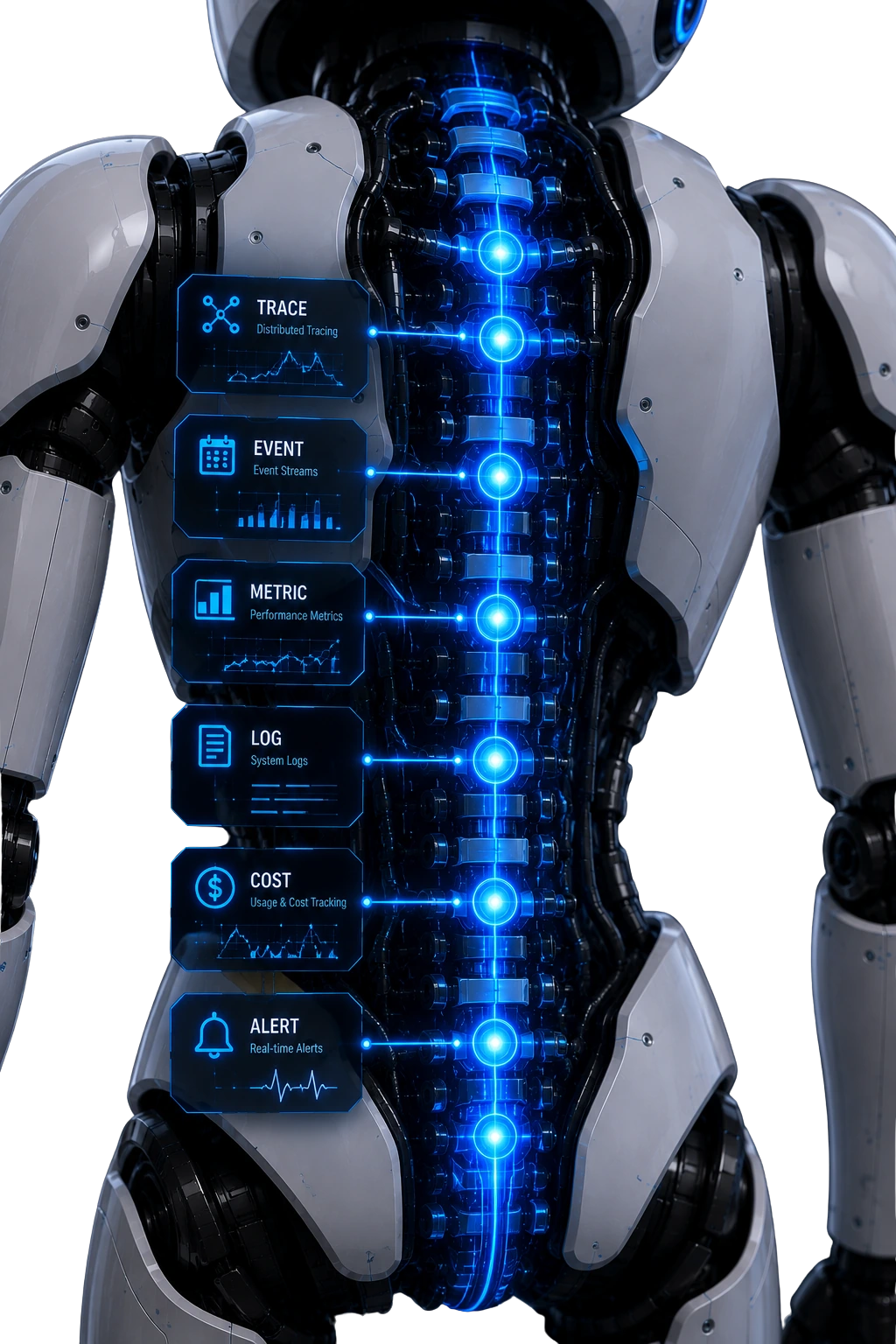
Largestack observability for trace, event, metric, log, cost and alert
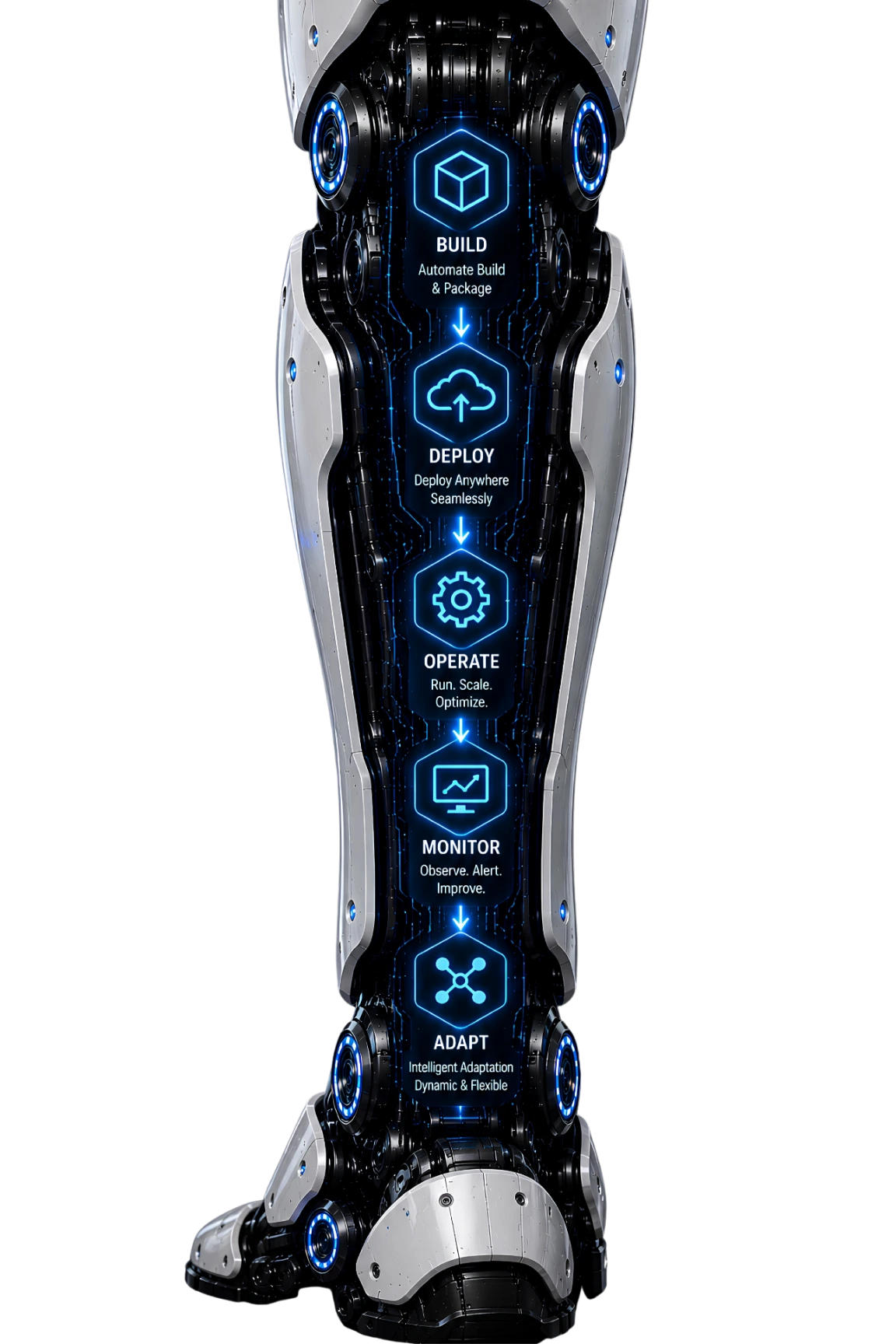
Largestack build deploy operate workflow
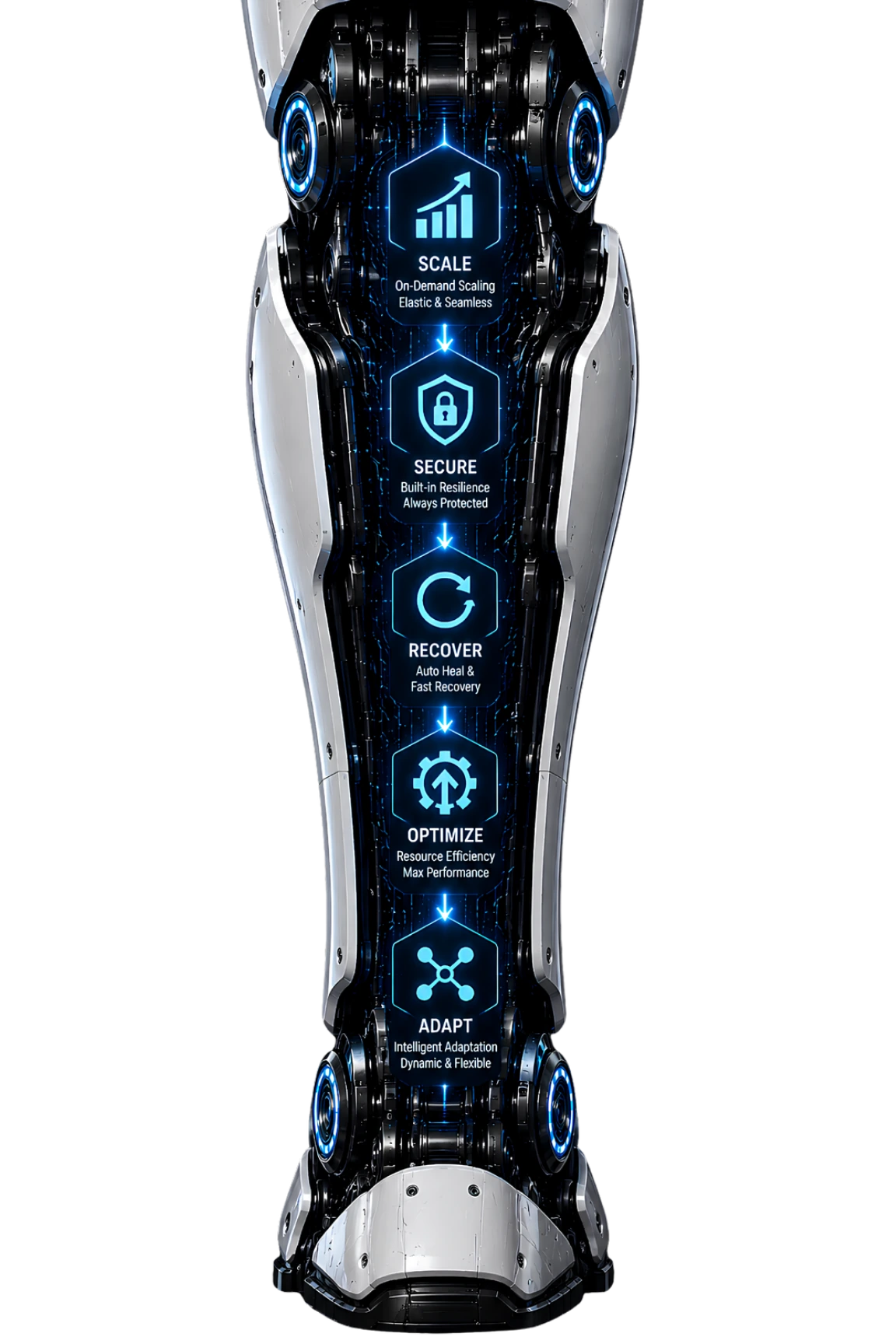
Largestack scale secure recover optimize adapt lifecycle
01 Orchestrator Receives the request and chooses the safest execution route.
01 Entry point

Request enters the orchestrator.

The orchestrator is the traffic controller. It reads the incoming task, chooses sequential/parallel/router/supervisor/DAG-style execution, manages state, and keeps the run controlled from start to finish.

User requestRouteExecution plan
  • Chooses the correct agent/workflow path.
  • Keeps task execution structured instead of random.
  • Hands off to agents with context and control.
02 Reasoning layer

Agents become controlled workers.

Instead of one chatbot doing everything, Largestack positions agents as typed runtime workers. Each agent carries role, provider/model, instructions, tool schemas, output rules, retry behavior, cost budget and trace context.

PlannerWorker agentResult
  • Each agent has a clear role and responsibility.
  • Agents run inside a shared governed runtime.
  • Outputs can move to tools, RAG, guardrails or response.
03 Process layer

The workflow engine makes the run predictable.

The workflow engine defines repeatable execution: start the task, route to agents, call tools or RAG, checkpoint state, apply checks, then return an auditable response. It supports Mermaid graph output and generated tests.

StartAgentToolsCheckOutput
  • Clear handoff between steps.
  • Less hidden behavior during automation.
  • Better foundation for testing and debugging.
04 Action layer

Tools let agents act on real systems.

Largestack treats tools as safe external action boundaries. Tools define schemas, timeouts, retries, risk type, approval behavior, idempotency and audit metadata before agents touch APIs, search, databases or connectors.

Agent intentTool callSystem result
  • APIs and connector-style integrations.
  • Search and database retrieval.
  • Controlled tool execution for safer automation.
05 Knowledge layer

RAG grounds the answer in real knowledge.

The knowledge engine loads documents, chunks content, creates embeddings, stores vectors, retrieves relevant context, reranks evidence, cites sources and supports no-answer behavior when evidence is insufficient.

DocsEmbedRetrieveGround
  • Document ingestion and indexing.
  • Vector retrieval for relevant context.
  • Grounded responses with source-aware evidence.
06 Context layer

Memory keeps useful context available.

Memory gives the runtime continuity. Buffer memory helps the current run, long-term and vector-backed memory preserve reusable knowledge, and enterprise usage keeps user/session/tenant memory isolated.

Current stateRecallStore
  • Short-term runtime context.
  • Long-term persistent knowledge.
  • Controlled recall and store operations.
07 Trust layer

Guardrails verify before the system acts.

This is the trust point. Guardrails inspect prompt injection, PII, topic rules, provider policies, tool permissions, approval needs and output risk before risky actions or final responses proceed.

Candidate outputPolicy checkApproved output
  • PII and data-protection controls.
  • Policy enforcement and human approval.
  • Audit records for traceability.
08 Evidence layer

Observability makes the agent system measurable.

Production teams need evidence. Largestack exposes trace IDs, run events, model calls, tool calls, RAG chunks, guardrail decisions, latency, costs, dashboard views and debugging context.

RunTraceMetricsAlert
  • Trace and event visibility.
  • Cost, latency and metric tracking.
  • Operational alerts for production monitoring.
09 Delivery layer

Build, deploy and operate like real software.

The production story does not stop at a notebook. Largestack covers project scaffolds, package build, wheel checks, generated tests, Docker runtime health, Compose and Helm deployment baseline.

BuildDeployOperateMonitor
  • Package applications cleanly.
  • Deploy through Docker/Helm-style paths.
  • Operate and improve continuously.
10 Operations layer

The runtime scales, secures and recovers.

This final capability frames the enterprise direction honestly: scale capacity, secure tenants, recover from failures, optimize resources and pass hardening gates such as load, backpressure and real Kubernetes proof.

ScaleSecureRecoverOptimize
  • Elastic scaling and resilience story.
  • Recovery and auto-heal posture.
  • Optimization and adaptation loop.
11 Unified framework

Largestack keeps the full run inside one governed runtime.

The same runtime record connects the request, plan, tools, retrieval context, memory state, guardrail decisions, response, trace and deployment surface.

All layersOne runtimeProduction AI
  • One traceable execution path across all runtime layers.
  • Reusable patterns for copilots, RAG assistants and agent workflows.
  • A clean path from local development to governed deployment.
Why Largestack

Largestack is built for the gap between demos and production AI.

Agent demos are easy. Production-style AI systems need routing, tool boundaries, retrieval grounding, memory, policy checks, runtime visibility and a deployable software structure.

Fragmented stacks slow teams down.

Agent code, RAG, tools, tracing, security and deployment often live in separate pieces. Largestack keeps the core runtime layers together.

RivaiLabs built it as a product surface.

The framework includes package structure, CLI scaffolding, docs, examples, deployment files, validation gates and trust center material.

The goal is governed AI software.

Largestack is designed for copilots, assistants and automation flows that must be explainable, testable, observable and safer to operate.

Framework surface

Largestack product surface.

The framework is organized around the way AI applications actually run: accept a request, plan the work, route execution, call tools, retrieve knowledge, enforce policy, emit traces and prepare the app for deployment.

LARGESTACK AI Build · Orchestrate · Secure · Observe · Deploy
01

User request

Apps, APIs, CLIs or dashboards send a task, question or workflow request.

02

Planner agent

The agent understands intent, creates a plan and decides which runtime layers are required.

03

Orchestrator

The orchestrator routes work across agents, tools, RAG, state and workflow steps.

04

AI agents

Specialized agents research, analyze, reason, execute and return structured results.

05

RAG + memory

Documents, vector stores and memory provide grounded context and continuity.

06

Guardrails

PII, policy, prompt safety, tool constraints, approvals and output checks reduce risk.

07

Final response

The runtime returns an answer, action result, structured output or workflow state.

08

Observability

Every run can emit traces, logs, metrics, cost signals, alerts and debugging context.

AI copilotsInternal assistants, support copilots, analyst bots and workflow copilots with traceability.
Enterprise RAGDocument ingestion, chunks, embeddings, vector stores, retrieval, citations and no-answer behavior.
Agentic automationPlanner/worker agents, typed tools, workflow checkpoints, approvals and structured results.
Provider flexibilityOpenAI, Anthropic, Google Gemini, DeepSeek, Groq, LiteLLM, Ollama/local models and any OpenAI-compatible endpoint through a capability matrix.
Ops-ready runtimeCLI scaffolds, package build, Docker, Compose, Helm baseline, health endpoints and validation commands.
Governance controlsPII checks, prompt-injection controls, tool policies, RBAC/session foundations and audit trail patterns.
AgentsTyped workers with roles.
WorkflowRouting and state.
ToolsSafe external actions.
RAGGrounded retrieval.
MemoryContext continuity.
GuardrailsPolicy and safety.
ObserveTrace, logs, cost.
DeployDocker/Helm path.
Quickstart

Install Largestack and run a typed agent workflow.

Install from PyPI, inspect the CLI, create a project, and run local validation. Requires Python 3.11+.

Install: pip install largestackCLI: largestack --helpVersion: python -c "import largestack; print(largestack.__version__)"
# Requires Python 3.11+
pip install largestack
largestack --help
python -c "import largestack; print(largestack.__version__)"
from largestack import Agent

agent = Agent(
    name="support_agent",
    instructions="Answer with grounded, concise steps."
)

result = agent.run("Create a safe support-ticket workflow.")
print(result.content)
# Create and validate a generated app
largestack init support-agent
cd support-agent
largestack run --input "Create a safe support-ticket workflow"
largestack doctor

 project generated
 runtime responded
 runtime checks completed
Architecture

Runtime architecture and platform boundaries.

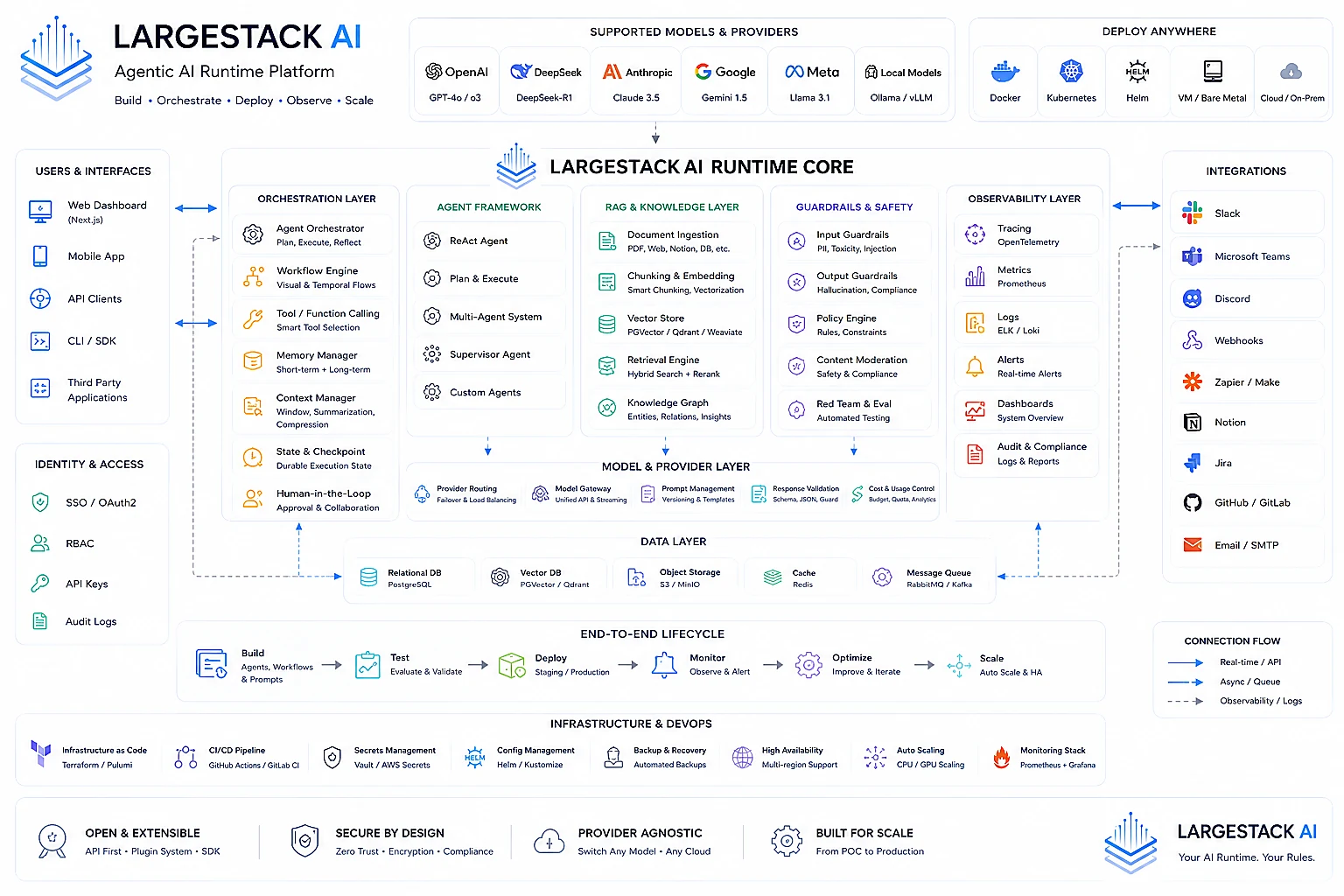
This HD map shows how Largestack sits between user interfaces, model providers, integrations, data stores and deployment infrastructure. The runtime core owns orchestration, agents, RAG, guardrails and observability.

Largestack AI Runtime Map
Open HD diagram
HD Largestack architecture diagram showing users, supported models, deployment targets, orchestration layer, agent framework, RAG and knowledge layer, guardrails, observability, model/provider layer, data layer, integrations, lifecycle and DevOps.
Mobile view supports horizontal swipe. Use Open HD diagram for full-resolution inspection.
01EnterWeb dashboard, mobile app, API clients, CLI/SDK and third-party apps send requests.
02Execute coreThe runtime core combines orchestration, agents, RAG, guardrails and observability.
03ConnectTools, integrations, data stores, providers and deployment layers plug into the runtime.
04OperateBuild, test, deploy, monitor, optimize and scale with audit evidence and lifecycle control.
Build guide

See exactly how to build on Largestack.

A step-by-step walkthrough — project layout, agents, orchestrator, RAG, validators, security and governance — with an interactive build flow and copy-paste commands.

Step-by-stepInteractive flow · plain-English glossary · copy-paste commands.
01BuildScaffold · agents · RAG · orchestrate
02ValidateSchema · groundedness · review
03SecureGuardrails · governance · audit
04DeployServe · REST · Kubernetes
The full build, end to end, with an interactive stage-by-stage walkthrough.Open the full guide →
Trust center

Release and runtime facts.

Compact proof points from the public package, repository, runtime requirement, license, deployment path and security checks.

Runtime SDKTyped agents, orchestrator, workflows, tools, RAG, memory and guardrail primitives.
Developer workflowCLI scaffold, examples, testing playbook, docs and project validation.
Provider layerOpenAI, Anthropic, Google Gemini, DeepSeek, Groq, LiteLLM, local/Ollama and any OpenAI-compatible path.
Operations layerObservability, metrics, Docker, Compose, Helm and health checks.
Governance layerSecurity policy, audit patterns, PII checks and tool policies.

Release facts

  • v1.1.1 on PyPI (Trusted Publishing)
  • 2,622 tests passing in CI (Python 3.11–3.13)
  • GitHub public repository
  • Python 3.11+ runtime target

Runtime coverage

  • Typed agents and orchestrator
  • Tool workflows and RAG
  • Memory and guardrails
  • Observability hooks

Deployment proof

  • Docker validation evidence
  • Helm validation evidence
  • CLI scaffold path
  • Health-check oriented runtime

Security posture

  • OWASP LLM & Agentic matrix — 9 covered / 8 partial
  • Deterministic red-team gate (core 11/11)
  • PII, injection & output guards
  • SBOM (CycloneDX/SPDX) + SIEM export
Use cases

AI application patterns teams can build with Largestack.

Use one runtime pattern across serious AI applications: typed agents for reasoning, tools and RAG for action and knowledge, guardrails for control, traces for review, and deployment files for pilots.

Product position

Developer speed with a runtime layer for governance, grounding, tracing and deployment.

Largestack keeps the first-run experience simple while exposing the product surfaces teams expect when an AI application moves beyond a notebook: typed agents, tool boundaries, RAG grounding, guardrail checks, traces, tests, package validation and deployable infrastructure.

Python-first developer path Runtime primitives in one repo RivaiLabs product ownership Trust center and release gates Deployable project structure
Product roadmap

RivaiLabs roadmap for Largestack.

Done

Runtime foundation

Agent/orchestrator APIs, tools, RAG, memory, guardrails, observability, CLI scaffolds, docs, examples and deployment files.

Now

Public site and release polish

PyPI packaging, website, developer docs, example apps, trust center, clean comparison pages and POC onboarding.

Next

Production hardening

External security review, Kubernetes install proof, load/backpressure validation, signed releases, support process and broader platform integrations.

POC / collaboration

Build a secure AI workflow POC in 10–15 days.

Book a POC call to scope a secure AI assistant, RAG workflow, or automation pilot.

Document/RAG assistant Workflow automation Guardrails and safety policies Logs and traces Docker/local/cloud demo Final report and production roadmap
Contact

Talk to RivaiLabs about Largestack AI.